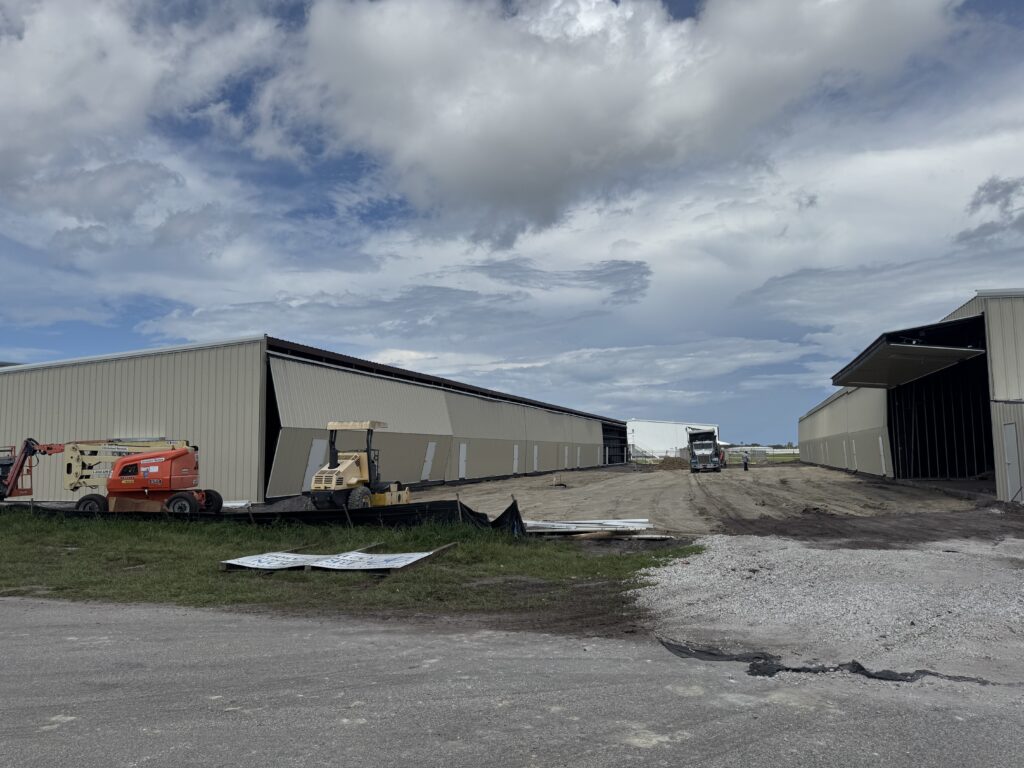
In aviation development, nothing takes flight without first conquering the ground. This week, Sabal Aviation’s construction team began soil mixing and compaction for the primary taxiway at our MLB site – one of the most critical steps in Phase One.
The objective? Create a subgrade with the structural integrity to support taxiing jets, heavy-duty tugs, fuel trucks, and rapid Florida weather shifts. That requires more than dirt. This week’s work includes lime stabilization – an engineering method used to chemically alter soil properties for long-term durability. Lime is mixed into the existing soil to reduce moisture content and increase strength, allowing for maximum compaction with minimal shifting over time.
Why it matters:
FAA standards demand a minimum 95% compaction rate for aviation-grade subgrades. Anything less risks surface failure under load. Every section is tested in-place before we move forward. Our crews are running compaction tests daily with geo-tech engineers onsite, confirming we’re hitting target densities.
This isn’t aesthetic progress. It’s structural.
Once soil prep passes inspection, formwork will begin for taxiway paving – bringing the site one step closer to operational readiness. Hangar walls are already up on Side A, slabs are complete on Side B, and now the horizontal systems are catching up. Sabal’s construction cadence is intentional: align vertical and surface timelines to compress delivery schedules and streamline turnover.
Why it matters for owners:
Taxiway access is the defining advantage in private hangar value. Without it, you have storage. With it, you have operational control. This week’s progress ensures direct movement between hangar bays and runway access – a feature that adds long-term resale value, higher tenant demand, and significantly greater utility.
Explore available custom hangar units here.