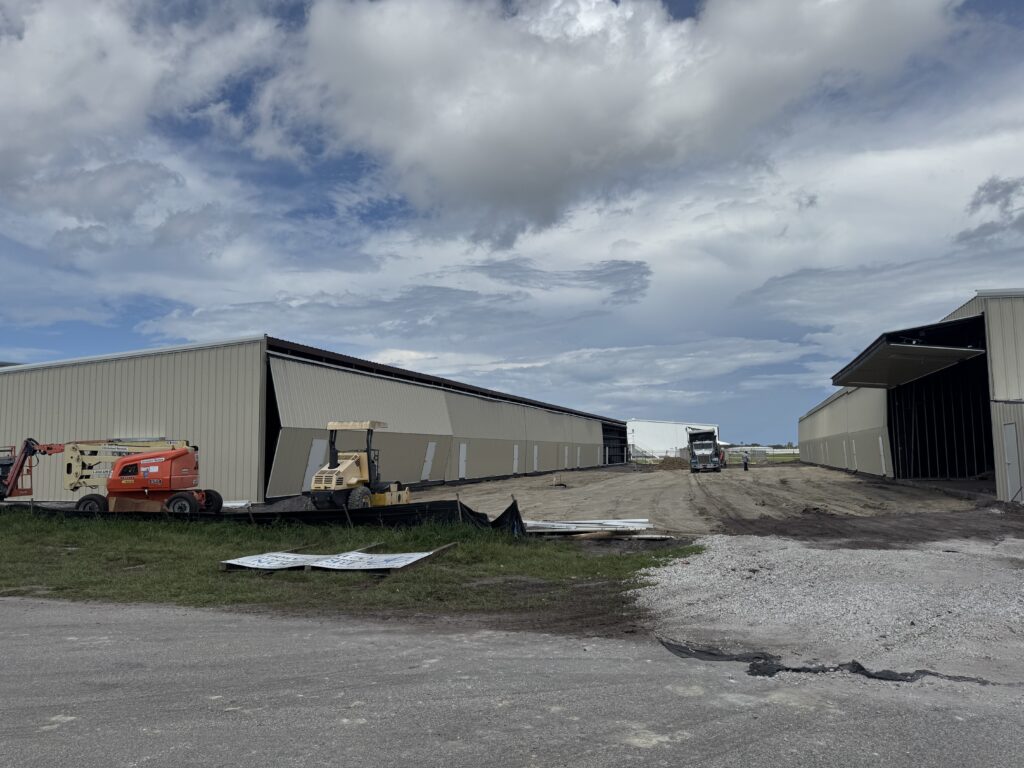
Aviation has no tolerance for shortcuts. Every inch of an aircraft is deliberate, and the same principle applies when a hangar reaches its final stage of development. As Phase 1 at MLB Melbourne Orlando International Airport nears completion, Sabal Aviation focuses on the details that define the difference between a functional facility and a finished one. This is where precision construction meets refined execution.
From Structure to Space
By the time a hangar reaches interior detailing, the structural integrity has already been proven. The steel stands firm, the slab is cured, and the taxiway connection is ready for integration. What follows is a disciplined process of transformation that turns industrial-grade infrastructure into an aviation environment that is efficient, elegant, and pilot-ready.
Every finish inside the hangar serves a dual purpose. The materials are chosen not only for aesthetics but for resilience. Floors are polished and sealed to resist fuel and hydraulic fluid. Walls are coated for light reflection and ease of maintenance. Electrical systems are laid out with clear logic, minimizing interference with future equipment installations.
Precision Inside the Walls
Interior detailing demands the same mindset as cockpit engineering. Outlets, lighting, and conduit runs are positioned with exact spacing to align with both design and operational plans. Fixtures must withstand temperature shifts, humidity, and continuous vibration. Nothing is arbitrary.
For pilots and operators who customize their space, this stage allows for tailored integration, such as mechanical rooms, storage zones, or workspace configurations. Each component is reviewed for accessibility, safety, and compliance before completion. The emphasis is on harmony between design and function.
Lighting That Elevates Performance
Lighting inside a hangar is not just about brightness. It is about clarity. Proper illumination affects safety, maintenance accuracy, and visual comfort. Sabal Aviation ensures that each hangar’s lighting plan achieves balanced coverage, eliminating shadows that can distort depth or obscure detail. Fixtures are selected for longevity, low maintenance, and energy efficiency.
At MLB, where natural light plays a role through wide-span doors and skylight panels, lighting systems are calibrated to work with daylight, not against it. The result is an interior that feels both open and operationally precise.
The Integration Phase
Connecting the interior systems is where engineering transitions into orchestration. HVAC, fire suppression, communication lines, and electrical systems all converge in this stage. Each component is tested, certified, and optimized to perform together under real-world conditions. This synchronization ensures that when the first aircraft enters, the hangar operates seamlessly from day one.
Optional features such as smart automation, custom office buildouts, or rest areas can also be incorporated here. While these elements are fully customizable, they are integrated with the same precision as the base systems. The final product reflects both technical mastery and modern design sensibility.
Finishing the Standard
The final interior detailing phase represents more than completion; it represents calibration. Every element, visible or hidden, is fine-tuned to perform under the expectations of elite aviators. At MLB Melbourne Orlando International Airport, Sabal Aviation’s work reaches its most refined stage not with the largest machinery or heaviest steel but with the smallest details. The finish is not just aesthetic. It is operational excellence made visible.
Explore available custom hangar units at MLB here.