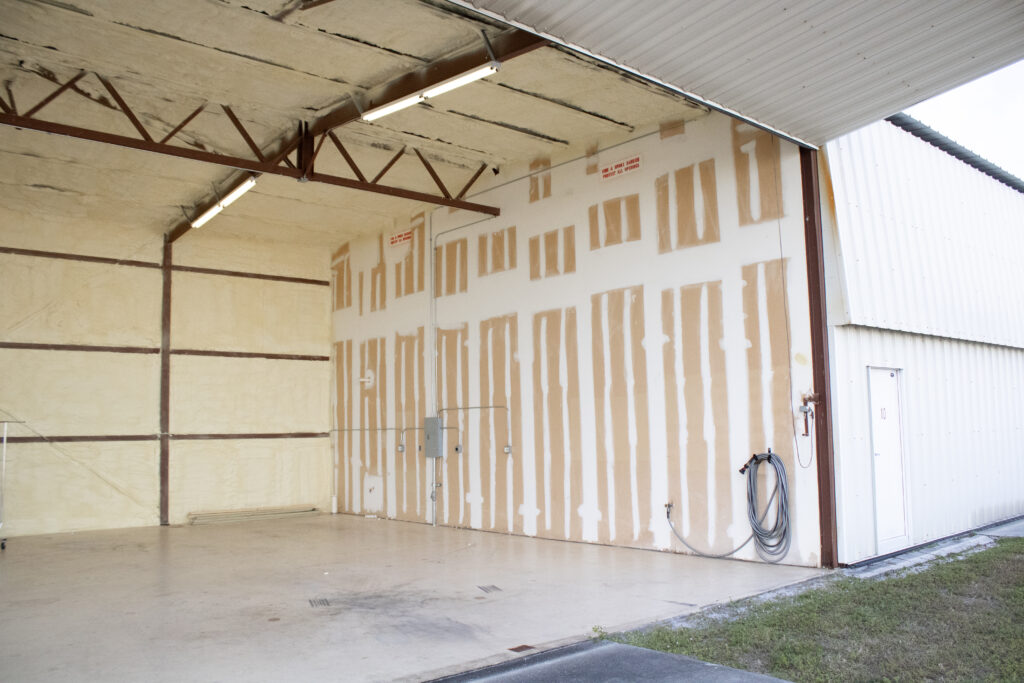
Aircraft are engineered for thin, dry air at altitude. On the ground in Florida, the environment is the opposite. High humidity, salt air, and frequent rain attack metals, electronics, adhesives, leather, and carpets. The damage is gradual. The cost is significant. At MLB Melbourne Orlando International Airport, Sabal Aviation designs climate-controlled hangars to neutralize the most persistent threat to aircraft value.
Humidity drives corrosion. Moist air carries chloride ions that penetrate coatings and find bare metal. Oxidation begins. Fasteners, lap joints, and hidden cavities suffer first. Avionics face a different risk. Moisture condenses on cool circuit boards after a night in air conditioning followed by a rapid door opening on a humid morning. That cycle of condensation and drying invites corrosion and intermittent faults. Interiors also pay the price. Leather absorbs moisture and rots from the inside. Carpets trap mold. Odors follow.
The economic impact is direct. Corrosion inspections take time. Corrosion repairs take more. Grounded aircraft cannot generate value. Buyers discount aircraft with a history of uncontrolled storage, and underwriters pay attention as well. Premiums reflect risk. A simple reality emerges. A climate-controlled hangar pays for itself in reduced maintenance, stronger resale value, and consistent dispatch reliability.
A proper system starts with the envelope. Walls and roof assemblies must be insulated and sealed. Vapor barriers control moisture migration. Penetrations at conduits, doors, and joints must be airtight. The building cannot fight humidity if the shell leaks. Sabal Aviation treats envelope integrity as a first-order requirement, not an afterthought.
The HVAC strategy does the heavy lifting. Temperature control without humidity control is not enough. The target is stable temperature and a relative humidity band that protects metals, finishes, and electronics. Many owners aim for 45 to 55 percent relative humidity. Desiccant-assisted systems or dedicated dehumidification units help in peak summer months. Supply air distribution must reach under wings and into corners where stagnant air can linger. Return air paths must be unobstructed by partitions or storage.
Doors deserve special attention. Large openings equal large humidity spikes. Rapid lift or bi-fold doors should seal tightly. Gaskets and sweeps matter. Air curtains or vestibules can blunt the humidity surge during frequent movements. Good practice also includes limiting door open times during the hottest and wettest part of the day when practical.
Water management sits alongside air management. Trench drains, floor slope, and squeegee protocols remove wash water quickly. Standing water drives vapor into the space and raises local humidity. Exterior grading around the hangar must move stormwater away from the structure. In Florida, extreme rain events are a reality. Site drainage is not optional.
Interior finishes can contribute to the defense. Moisture-resistant paints, antimicrobial coatings, and non-porous surfaces reduce mold risk and ease cleaning. Storage choices matter. Cardboard boxes absorb moisture. Closed cabinets protect tools and spares. Smart owners separate chemical storage and battery charging areas from the main bay to reduce odors and corrosive vapors.
Monitoring closes the loop. Data loggers track temperature, relative humidity, and dew point. Remote alarms notify staff when conditions drift out of range. Maintenance teams can then address a failed dehumidifier, a stuck damper, or a torn door seal before damage accumulates. Sabal Aviation integrates monitoring into the build so owners have simple, reliable visibility.
Climate control is more than preservation. It is readiness. Aircraft stored in stable conditions start cleaner, drier, and more reliable. Inspection intervals stretch. Interior refurbishments are delayed by years. The owner keeps more capital focused on flying instead of fixing. That is the definition of operational advantage.
The Florida coast demands respect. Salt, heat, and moisture will find any weakness. Owners at MLB Melbourne Orlando International Airport who choose climate-controlled hangars built by Sabal Aviation enjoy a decisive edge. Their aircraft remain resilient. Their operations remain consistent. Their asset value holds. Humidity is a silent killer. Inside a properly engineered hangar, it has nowhere to hide.
Explore available custom hangar units at MLB here.